Every January starts the same way.
New targets.
New forecasts.
New optimism.
But by February, many teams realize something uncomfortable:
They didn’t reset.
They just restarted.
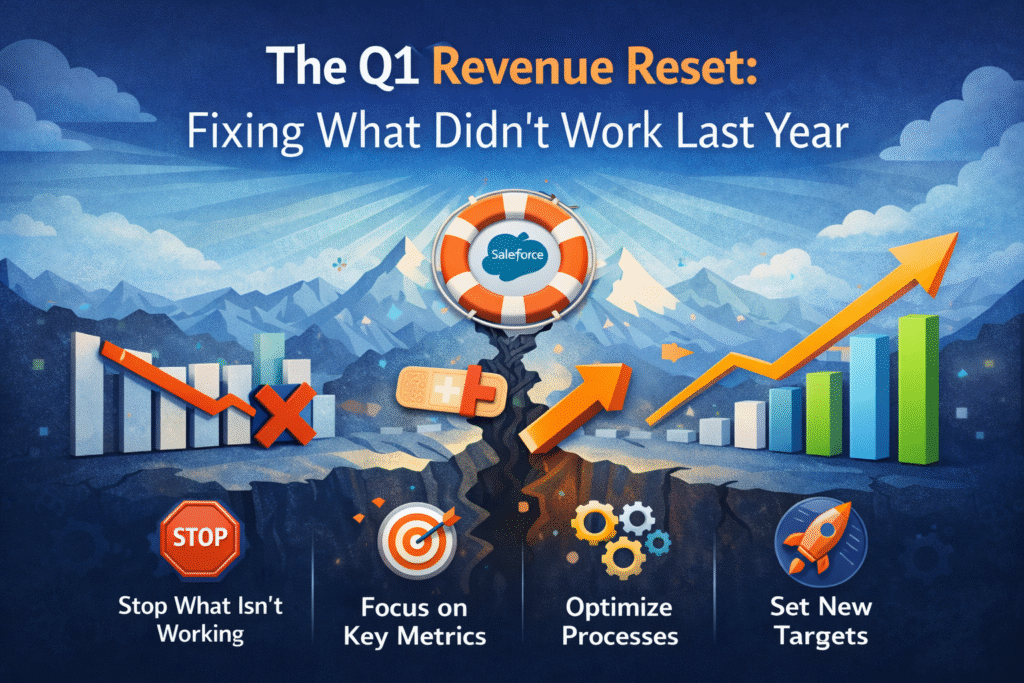
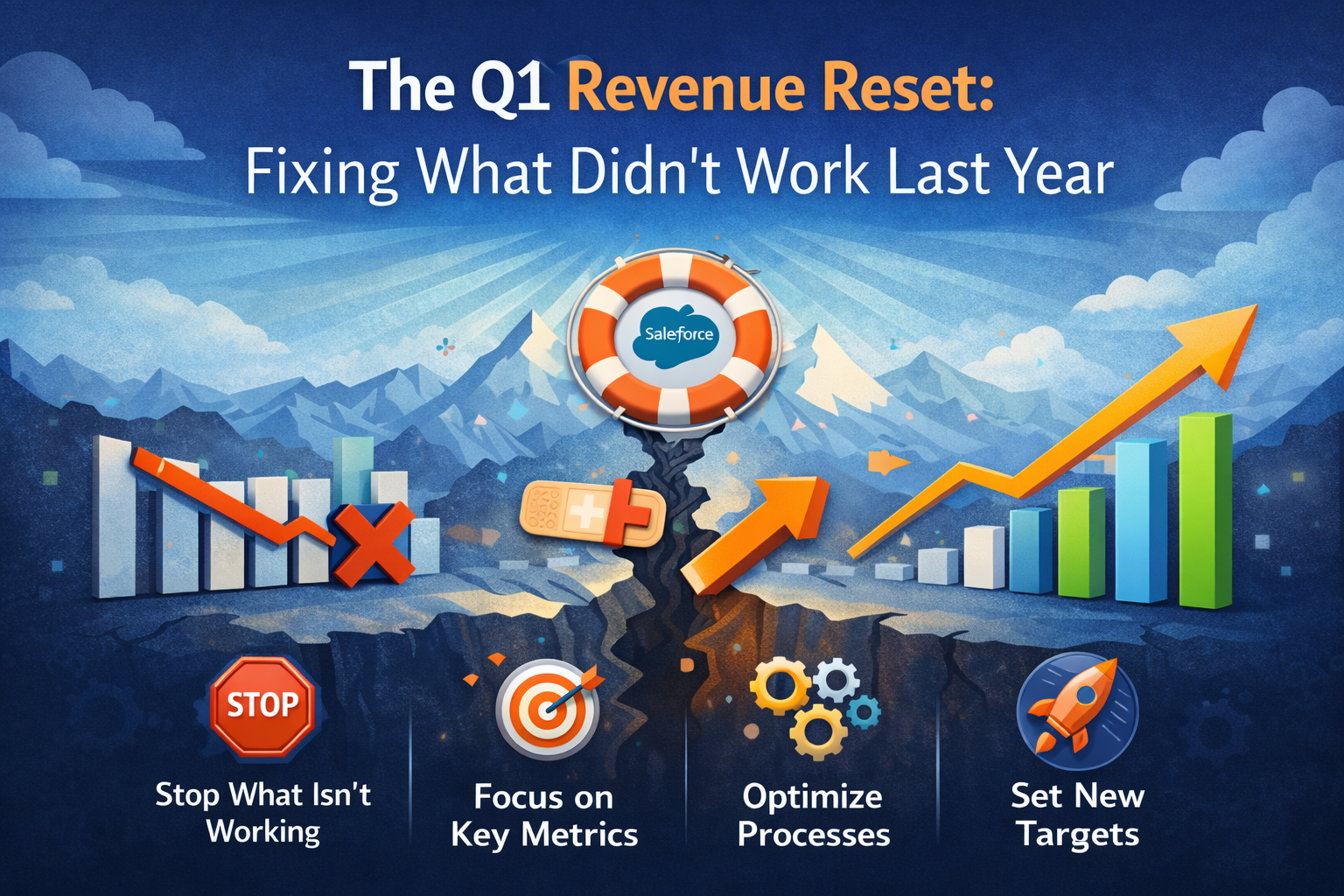
Q1 isn’t about doing more.
It’s about fixing what quietly broke last year—and setting revenue up to scale before the pressure hits.
The Trap: Carrying Last Year’s Problems Into This Year’s Forecast
Most organizations roll into Q1 with:
- The same Salesforce setup
- The same sales stages
- The same assumptions about pipeline quality
Only the quota changes.
That’s not a reset.
That’s a rollover.
And it’s why Q1 often feels harder than it should.
Step 1: Separate Activity From Progress
Last year likely produced a lot of movement.
But movement isn’t momentum.
Ask these questions:
- Which deals advanced because buyers moved—not because reps updated stages?
- Where did pipeline stall without being acknowledged?
- How much revenue was “forecasted” but never realistic?
If Salesforce tracked activity but not buyer commitment, progress was overstated.
Q1 is the moment to fix that.
Step 2: Rebuild Sales Stages Around Reality
If deals lived too long in late stages last year, your stages are lying to you.
A Q1 reset means:
- Removing stages that don’t represent a buyer decision
- Defining clear exit criteria based on buyer action
- Creating space for “not yet” instead of forcing optimism
When stages reflect reality, pipeline pressure drops—and trust increases.
Step 3: Clean the Pipeline Without Punishing the Team
Pipeline clean-up fails when it feels like a witch hunt.
The goal isn’t to ask:
“Why didn’t you close this?”
It’s to ask:
“What signal were we missing?”
Q1 is the right time to:
- Close or downgrade deals that lost momentum last year
- Reclassify pipeline by confidence, not hope
- Reset close dates based on buyer behavior
This isn’t about shrinking pipeline.
It’s about strengthening it.
Step 4: Fix Forecasting Before It Breaks Again
If last year’s forecast surprises were painful, the issue wasn’t accuracy—it was timing.
Most forecasts rely on lagging indicators:
- Stage
- Amount
- Close date
A Q1 reset introduces leading indicators:
- Time since last buyer action
- Mutual next steps
- Stakeholder engagement
- Deal velocity
Forecasting improves when Salesforce shows movement, not just position.
Step 5: Make Salesforce Useful to Reps Again
If Salesforce felt like admin work last year, adoption suffered—and data followed.
The Q1 reset is the moment to:
- Remove unnecessary required fields
- Surface insights that help reps prioritize deals
- Use automation to reduce friction, not add it
When reps get value first, accuracy improves naturally.
The Reset Most Teams Skip
Here’s the uncomfortable truth:
Most revenue problems aren’t execution issues.
They’re design issues.
If Salesforce was built to report on the business instead of run it, no amount of motivation will fix the gap.
Q1 is the window to redesign before pressure, urgency, and end-of-quarter chaos return.
Final Thought
A true Q1 revenue reset doesn’t ask teams to sell harder.
It asks leadership to build better systems.
At Mercury Collective, we help organizations use Q1 to fix the structural issues hiding in their CRM, pipeline, and forecasting—so revenue feels clearer, calmer, and more predictable all year long.
Because the goal of Q1 isn’t momentum.
It’s clarity.